Shortening trousers is a practical repair skill that can extend the life of clothes you already own. A hand-sewn hem is especially useful when you want a discreet finish and do not have a sewing machine nearby. The exact method depends on the fabric and original hem: jeans with heavy topstitching, tailored wool trousers and stretch pants may need different approaches.
Decide the correct finished length
Try the trousers on with the shoes you normally wear. Fold each leg inward until it hangs where you want it; mark with pins or tailor’s chalk. Move, sit and stand to check the length. Remove the trousers and lay them flat to compare both legs before cutting.
If you are unsure, leave the excess fabric inside and do not trim it yet. You can test the hem and alter it later. If your trousers have a pressed crease, follow the crease when aligning the legs so the hems remain level.
Gather a small repair kit
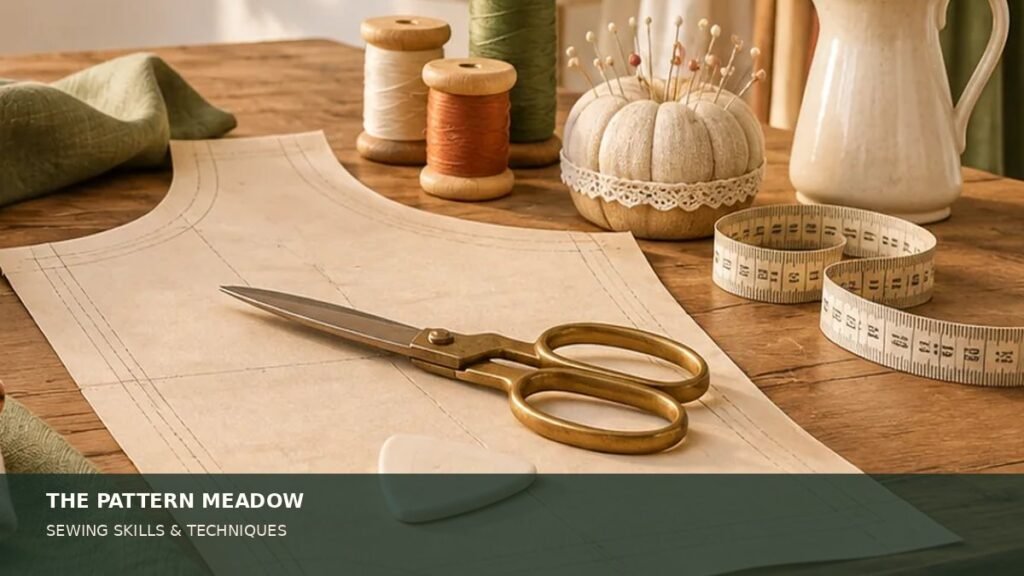
You need a hand-sewing needle suitable for the fabric, matching thread, measuring tape, pins, iron and optional seam ripper. A thimble can help with dense fabric. For a delicate fabric, test the iron temperature and needle size on an inconspicuous area first.
Prepare the fold
- If the existing hem is bulky or folded at the wrong position, carefully unpick it. Remove loose threads and press out the old crease as well as the fabric allows.
- Turn the new hem to the wrong side. For a traditional double-turn hem, press the raw edge under once and then fold again to the finished depth. Confirm the total fold depth matches on both legs.
- Pin or baste near the fold. Try the trousers on again: the hem should hang parallel to the floor when you stand naturally, allowing for the desired break over your shoes.
Sew a discreet catch stitch
- Thread the needle with a manageable length of matching thread and secure the beginning inside the folded allowance.
- Take a tiny bite of the outer trouser fabric, catching only a few threads so the stitch is almost invisible on the right side. Then pass the needle diagonally through a slightly longer section of the folded hem allowance.
- Repeat at regular intervals without pulling the thread tight. The hem should hang naturally and have a little give.
- Tie off securely inside the fold. Remove the basting and give the hem a final press through a pressing cloth if your fabric requires one.
When to choose another method
For stretch trousers, a rigid hand stitch can break during wear; consider a stretch-compatible method. Heavy jeans are often better finished with a machine and suitable denim needle, or by preserving the original hem. If the leg taper changes significantly at the new hem, you may need to adjust the width of the turned-up fabric so it lies flat.
Before buying supplies, check our beginner sewing toolkit. For more garment decisions, read Fabric & Fit Guide.
Ready for another project?
Explore our project finder to match sewing ideas with your experience.
Browse project guides