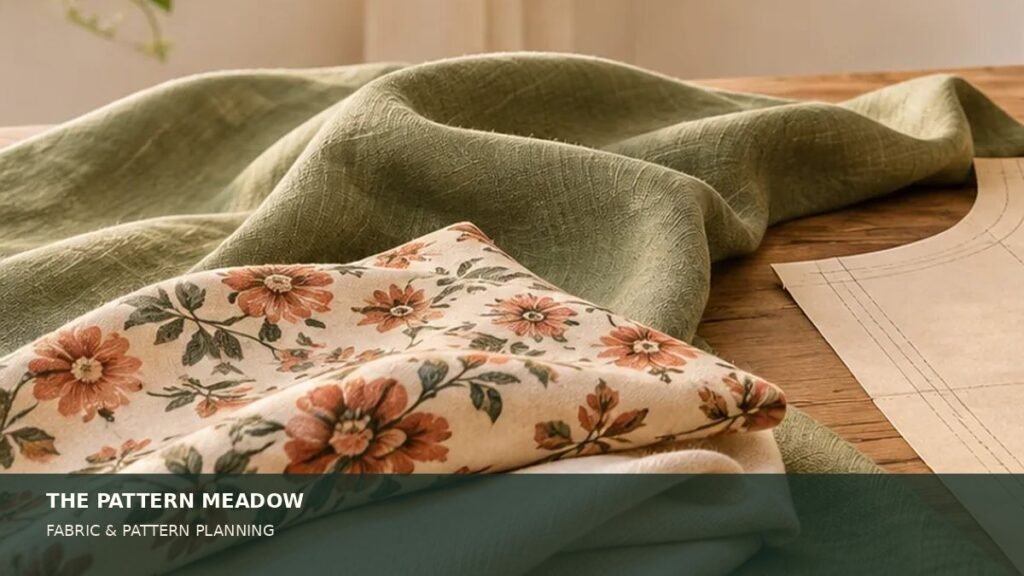
Buying too little fabric can stop a project before the first seam. Buying far too much is expensive, especially when you are testing a new sewing hobby. A reliable yardage estimate starts with the pattern layout and fabric width—not with the finished garment’s dimensions alone.
Use the pattern’s yardage chart first
Most commercial patterns provide a recommended fabric amount for each size and fabric width. Find your selected size, then read the corresponding length for the width you intend to buy. If the chart distinguishes with nap or without nap, choose the appropriate layout for your fabric.
‘Nap’ can mean directional texture, as in velvet, or a print that must run the same way on all pieces. Directional placement often takes more fabric than a layout where pieces can be flipped end for end.
Understand fabric width
Common cloth widths vary widely—often around 110 cm or 140–150 cm, but many specialty fabrics are different. Confirm the actual usable width, excluding any damaged or unusable selvedge area. A yardage chart intended for wide cloth may not work when you buy a narrower roll.
If buying fabric online, check how the store sells length: meters, yards or increments. One yard equals 0.9144 meters; avoid casually treating a yard and meter as identical when the amount is tight.
Make a paper layout when uncertain
- Prepare all full-size pattern pieces in the size you plan to sew, including facings, pockets and sleeves.
- Fold a large sheet of paper to represent the usable fabric width at a consistent scale, or lay out the real pieces on a clean surface with the intended fold.
- Arrange pieces following grainlines, cut-on-fold directions and the print orientation. Keep the space required for seam allowances and pattern edges.
- Measure the total length taken by the layout. Add any required allowance for shrinkage, straightening a crooked cut edge, print matching or cutting mistakes.
There is no universal ‘add 10%’ rule that fixes every layout. A large plaid repeat or wide skirt panel can demand far more additional length than a small percentage, while some simple projects need little extra.
Examples of easily missed yardage
- Sleeves may need additional length when cut on a directional print.
- A pattern’s optional collar, belt or pocket pieces still use fabric.
- A full gathered skirt can require large uninterrupted widths.
- Pattern matching at visible seams may require repeating the plaid or stripe in the next fabric section.
- Prewashing can shrink some fabrics; check care recommendations before cutting.
Keep purchases realistic
Start with a manageable project if the fabric cost makes experimentation stressful. Check whether your first garment would benefit from a muslin test garment. For print alignment, read matching stripes and plaids, and visit Find Patterns to choose a suitable project.
Ready for another project?
Explore our project finder to match sewing ideas with your experience.
Browse project guides